


Vampirio: Defend & Survive
4.5125.00 Reviews
App Specs
- Version
- 1.5.10.25847
- Updated On
- License
- Free
- Downloads
- 100,000+
- Developer
- Outfit7 Neo Limited
- Categories
- Action
- Platform
- Android
Screenshots

 Analysis by AppCompare
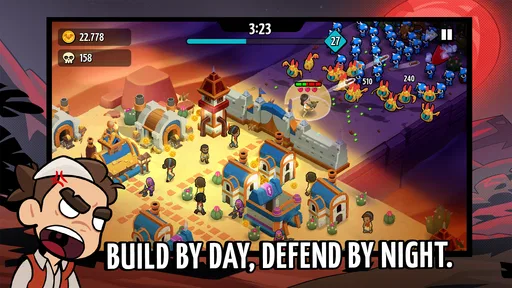
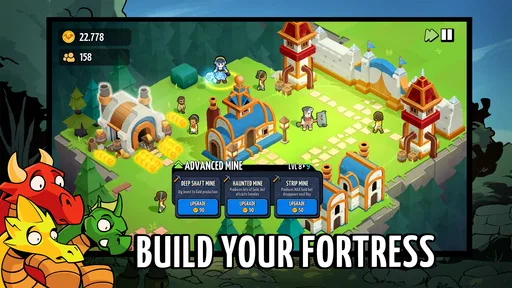
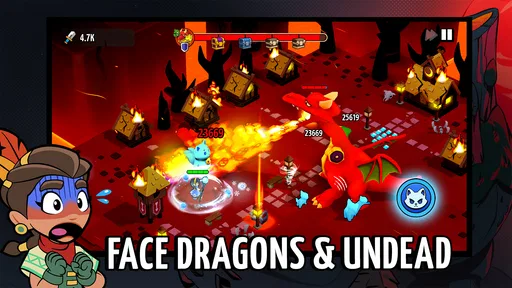
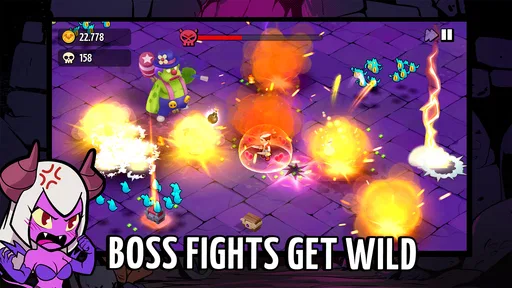
I spent time with Vampirio: Defend & Survive expecting a quick action game, but its best moments come from managing two very different rhythms. During the day, I build and improve a fortress; after dark, I have to deal with monster attacks and make fast decisions under pressure. That day-night split gives the game a clearer identity than a straightforward arena fighter, even though the individual controls are easy to understand.
Developed by Outfit7 Neo Limited, this free action game is aimed at players who like short survival sessions with a light base-building layer. It is available for Everyone, runs on Android 6.0 or later, and its current version is 1.5.10.25847. The game has reached over one hundred thousand installs and holds a 4.6 average from around two thousand ratings, which suggests that its simple loop is connecting with a healthy group of players.
How the day-and-night loop works in practice
My usual session starts with a practical question: what will help me survive the next raid rather than what looks most attractive right now? Daytime is the planning window. I use it to strengthen the fortress, prepare the space around it, and think about how much risk I am willing to accept once the monsters arrive. Nighttime removes that calm. The focus shifts from construction to movement, timing, and keeping the defense from collapsing.
That rhythm makes the game easy to pick up in small breaks. A short session can still feel complete because it has a natural beginning, preparation phase, attack phase, and result. It also gives me a reason to replay rather than simply repeat the same fight. A decision made during the day changes how comfortable the following night feels, so failure usually encourages a different plan instead of just another attempt with identical preparation.
The important habit is to avoid spending every resource as soon as it becomes available. Early on, I found it tempting to improve whatever was immediately visible, but saving enough flexibility for the next attack was usually more useful. A fortress that looks stronger on paper can still leave me exposed if the surrounding approach is neglected or if I enter the night phase without a clear priority.
I also learned to treat the first moments of a raid as information gathering. Rather than reacting to every enemy movement, I watch where pressure develops and identify the part of the defense that is actually in danger. This prevents wasted movement and makes the action feel more deliberate. The game is accessible, but it rewards players who stop treating every threat as equally urgent.
For an everyday example, I can imagine playing during a commute or while waiting for an appointment. I would begin a session with enough time to make a few defensive choices, then continue through the raid without needing a long uninterrupted campaign. That works well for people who want a focused mobile game rather than a large world demanding constant attention.
Worth Reading Before You Choose

Flipboard Shows What News Apps Must Do Beyond the Feed

Switching to Android Auto Means Rethinking Your Driving Routine

Google Calendar Makes a Crowded Week Easier to Manage

Ludo King Makes the Most of the Minutes Between Plans

Baby Panda World Brings Quick Play to Modern Phones, but Its Game Library Feels Busy

ESPN’s Live Game View Makes Following Close Games Easier
What I check before committing to a run
Before a night phase, I look at the fortress as a system rather than a collection of separate upgrades. I ask which weakness would cause the biggest problem if the attack became messy. Sometimes the sensible choice is a direct improvement; at other times, preserving resources or adjusting my position is more valuable. This simple checklist keeps the preparation phase from becoming random tapping.
My repeatable workflow is straightforward:
- Review the most exposed part of the fortress first.
- Reserve enough resources to respond after the raid begins.
- Enter the night phase with one main defensive priority.
- Watch the opening movement before committing to a risky action.
- After the run, change one major decision so the result is easier to understand.
The last point matters more than it sounds. If I change everything after a defeat, I cannot tell which adjustment helped. Changing one major element at a time turns each attempt into a small experiment. That is one of the more satisfying parts of the design: the game can be enjoyed casually, but it also supports a methodical approach for players who like improving through observation.
Settings and comfort choices worth checking
I recommend checking the available settings before settling into longer sessions. On a mobile action game, comfort can affect performance as much as strategy. I look for control options, sound controls, visual preferences, and any choices that make the screen easier to read. I would not assume that the default arrangement is ideal for every phone or every hand position.
For me, the most useful practical adjustment is making sure the controls feel predictable before the pressure rises. If an action requires too much attention to locate, it becomes a problem during a raid even when the underlying strategy is sound. I also prefer to keep audio at a level where it supports awareness without becoming tiring, especially when playing repeatedly.
Players using an older device should give the game a short test run before committing to extended sessions. The minimum operating-system requirement is Android 6.0, but compatibility on paper does not guarantee that every device will feel equally comfortable. Screen size, touch response, and general performance can change how manageable the night phase feels. That is not a criticism unique to this title; it is simply more noticeable in a game built around quick reactions.
I would also check whether notifications or interruptions are likely to break a session. A pause at the wrong moment can turn a controlled defense into a lost one. If I know I will be interrupted, I prefer a brief preparation session or wait until I can give the raid my full attention. The game is casual in presentation, but its action sections still benefit from concentration.
Faster patterns that improve repeat runs
The fastest improvement I found came from separating urgent decisions from cosmetic or low-impact ones. During the day, I make the choices that directly affect survival first. I leave less important adjustments until I know the core defense is ready. This reduces the amount of time spent reconsidering the same screen and helps me begin each raid with a clear plan.
Another useful pattern is to use movement economically. I do not rush toward every visible threat. Instead, I try to stay close enough to respond while avoiding unnecessary exposure. This is especially helpful when several problems appear at once. A frantic response may feel active, but it often creates a worse position than waiting briefly and choosing the threat that can actually damage the defense.
I also recommend learning the difference between a failed plan and a badly executed plan. If the fortress was underprepared, better reactions may not save the run. If the defensive setup was sound but I moved too early, rebuilding everything is unnecessary. Recognizing that distinction makes progression feel less mysterious and prevents overcorrecting after one poor night.
For players who want a repeatable routine, I would use this sequence: prepare the most vulnerable area, keep a reserve, observe the opening attack, respond to the largest immediate danger, and review the result before spending again. It sounds basic, but it creates consistency. The game becomes less about frantic improvisation and more about making a few good decisions in the right order.
There is also a useful trade-off between speed and safety. A cautious run may take more attention and feel slower, but it gives me more information about how the defense behaves. A fast, aggressive choice can produce a satisfying result when it works, yet it is harder to learn from when it fails. I use the safer approach while testing a new strategy and take larger risks once I understand the consequences.
Where the action feels strongest
The night raids are the most engaging part for me because they give the daytime decisions immediate meaning. Building without a threatening follow-up would feel like decoration, while fighting without preparation would lose the fortress theme. Here, the two halves support each other. The action supplies tension, and the construction phase gives that tension context.
The game is also approachable because it does not require a large amount of genre knowledge. Someone unfamiliar with roguelike action can understand the basic goal quickly: prepare, survive, learn, and try again. At the same time, experienced players can create their own rules, such as limiting unnecessary spending or changing only one defensive choice per attempt.
That makes it a better fit for players who enjoy compact decision loops than for people seeking a deep narrative or a highly elaborate strategy simulator. I never felt that the fortress-building layer was trying to replace a full management game. It is there to make the survival action more meaningful, not to offer endless economic detail.
Where the design asks for patience
The same simplicity that makes the game accessible can limit its appeal over time. If you want a huge selection of units, complicated production chains, or a broad campaign with many different strategic systems, this may feel too focused. Its pleasure comes from refining the core loop rather than constantly discovering unrelated mechanics.
The free-to-play structure is another point to consider. In-app purchases range from $0.49 to $99.99 per item, so I would approach spending carefully and decide in advance whether I am comfortable paying for optional progress or convenience. The game can be evaluated without treating purchases as part of the basic recommendation, but players who dislike any store pressure should pay attention to how they feel during repeated runs.
I also would not choose this as my first option for relaxed, passive play. The daytime portion is calmer, but the night raids ask for active attention. Likewise, it is not the best match for someone who wants a purely competitive action game with no construction decisions. A dedicated arena title will usually offer more immediate combat variety, while a traditional fortress-management game will usually provide more detailed planning. Vampirio sits between those alternatives.
The Everyone rating makes it broadly approachable, but age suitability does not tell me whether the pace suits every player. Younger or more casual users may enjoy the clear objective and short loop, while players who become frustrated by repeated survival attempts may prefer a more forgiving action game. I would recommend trying it with modest expectations rather than assuming the age label means the experience will be effortless.
How it compares with familiar alternatives
Compared with a standard endless runner, this game gives my decisions more weight because I am not only reacting to what is on screen. The fortress creates a reason to think ahead. Compared with a conventional tower-defense game, it feels more personal because I am involved in the survival action rather than simply arranging defenses and watching the result.
It is also less demanding than a full roguelike with many layered systems. There is a recognizable repeat-and-learn structure, but the presentation remains approachable and the central routine is easy to remember. That makes it suitable for someone who likes the idea of roguelike replayability but does not want to study a complicated rule set before enjoying a run.
On the other hand, players who want deep character builds, a long story, or extensive multiplayer interaction should look elsewhere. The appeal here is the compact relationship between daytime preparation and nighttime danger. If that relationship sounds interesting, the game has a clear reason to exist. If it does not, the surrounding features are unlikely to change your mind.
Who will get the most from it
I would recommend it to mobile players who enjoy action games with a planning pause between encounters. It is especially suitable for people who like improving through small adjustments, because each failed defense can reveal something about preparation, positioning, or timing. It also works for players who prefer sessions that have a clear shape instead of an open-ended world.
It is less suitable for someone who wants to build continuously without interruption, since the night phase regularly pulls the focus back into combat. It may also disappoint players searching for a highly detailed fortress simulator or a pure reflex game. The best audience is in the middle: people who want action to matter, but also want their earlier choices to influence the fight.
Because the game is free, I think the sensible approach is to install it and judge the basic loop before considering any purchase. Spend time learning how much preparation you actually enjoy, and do not buy something simply because a difficult raid made you impatient. The strongest reason to continue should be that you like improving your decisions, not that you feel pushed to skip the learning process.
My verdict after learning the routine
Vampirio: Defend & Survive succeeds because its two-part structure is easy to understand but offers room for better habits. I like that the fortress is not just a backdrop and that the night raids give every daytime choice a consequence. The most rewarding sessions are the ones where I identify a weakness, make a measured adjustment, and then survive because of that specific change.
Its limits are equally clear. The focused design will not satisfy everyone, and the purchase range means cautious players should keep an eye on spending. The action also demands more attention than a passive mobile time-filler, while the building side is lighter than what a dedicated strategy fan may expect.
Still, I think the game is worth trying for anyone who wants an approachable action title with a repeatable survival routine. My advice is to check the controls, keep a resource reserve, observe the first part of each raid, and change one major decision at a time. Those habits reveal the game at its best: not as a random rush, but as a compact test of preparation followed by quick thinking.
With its free entry point, Everyone rating, and support for Android 6.0 or later, it is easy to sample. I would keep playing if I enjoyed the satisfaction of making each fortress more dependable without turning the process into a full-time management task. For that specific audience, Outfit7 Neo Limited has created a focused action game that feels more thoughtful than its simple premise first suggests.
Pros
- Simple controls make it easy to start playing immediately.
- Short runs fit well into quick gaming sessions.
- Enemy waves create steady pressure and keep matches engaging.
- Upgrade choices add variety to each survival attempt.
- The dark vampire theme gives the game a distinctive atmosphere.
Cons
- Repeated wave patterns may feel predictable after extended play.
- Progress can become slower without frequent upgrades or grinding.
- The screen may become visually crowded during intense battles.
- Limited strategic depth may disappoint experienced survival-game players.
- Performance can vary on older phones during large enemy waves.
FAQs for Vampirio: Defend & Survive
What is Vampirio: Defend & Survive?
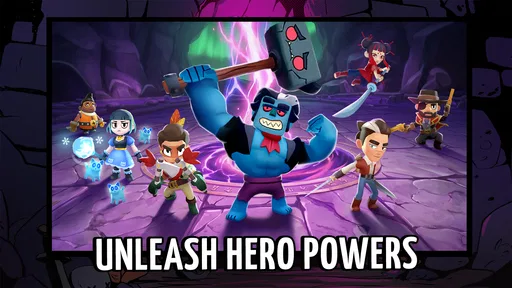
Vampirio: Defend & Survive is an action-survival game focused on battling waves of enemies while trying to stay alive for as long as possible. You control a vampire-themed hero, collect experience and useful items, unlock stronger abilities, and improve your build during each run. The gameplay is designed around quick decisions, constant movement, and progressively more challenging encounters.
How does the gameplay work in Vampirio: Defend & Survive?
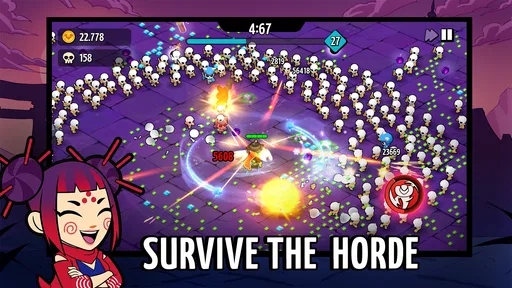
Each session places you in an arena or combat area filled with hostile creatures that become stronger and more numerous over time. Your main objective is to survive, defeat enemies, gather rewards, and select upgrades that improve attacks, defense, movement, or special abilities. The simple controls make it easy to begin playing, but choosing the right upgrades and positioning yourself safely becomes increasingly important.
Is Vampirio: Defend & Survive free to download and play?
Vampirio: Defend & Survive can generally be downloaded without an upfront purchase, allowing players to try the core experience before spending money. However, availability of advertisements, optional purchases, premium rewards, or other monetization features may depend on the version and platform. Before downloading, it is worth checking the store listing for current in-app purchase details and any requirements.
Does Vampirio: Defend & Survive require an internet connection?
The game may allow much of its main survival gameplay to be enjoyed offline, which is convenient when you are traveling or have limited connectivity. Nevertheless, some features, including advertisements, cloud saving, updates, leaderboards, events, or purchases, may require an internet connection. Because requirements can change between versions, players should review the official Android or iOS store information before relying on offline access.
Is Vampirio: Defend & Survive suitable for casual players?
Yes, the game is accessible to casual players because its controls and basic objective are easy to understand. You can start a run quickly and learn the upgrade system through regular play. At the same time, surviving longer sessions requires practice, strategic choices, and efficient movement. Players who enjoy short action sessions, roguelike progression, and gradually improving their character will likely find it engaging.


